Opinion
Takes worth having.
Recommendations and perspectives from 8+ years at the intersection of fintech, product, and strategy.
Opinion
Takes on financial systems, product strategy, cities, culture, and consumer behavior. Shorter form than research. More direct.
AI Is Expanding — and Disrupting — the SaaS Business Model
Why the next generation of software companies will look nothing like the last.
Tampa Is the City Everyone Should Be Paying Attention To
170 net new residents per day. JPMorgan processing $10 trillion in daily payments from Highland Oaks. The best airport in America. And a cosmic country guitarist you need to hear before everyone else catches on.
Formula 1 Isn't a Sport. It's a Perfectly Engineered Business System.
Liberty Media didn't just buy a racing series. They rebuilt the commercial architecture of a global entertainment platform — and the result is one of the most elegant business systems I've studied.
What I'm Reading, Using & Recommending
Books, products, and services worth your attention — things I've personally used and found genuinely useful.
Book
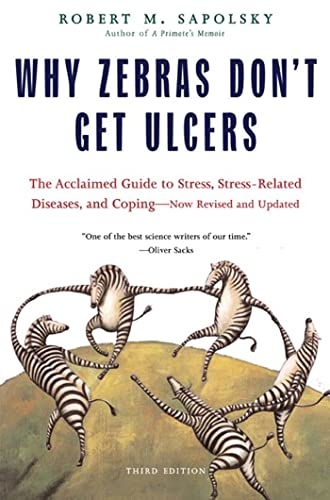
Why Zebras Don't Get Ulcers
Stanford biologist and MacArthur "Genius Grant" recipient Robert Sapolsky makes the case that chronic psychological stress — the kind only humans manufacture — is slowly killing us. Zebras sprint from lions and move on. We lie awake worrying about mortgages. This book explains what that difference does to your cardiovascular system, immune function, memory, and sleep — and what to do about it.
Why it's on this list: I think about this book constantly in the context of organizational design and product work. The research on stress and decision-making quality has direct implications for how teams and products should be built.
Buy on Amazon →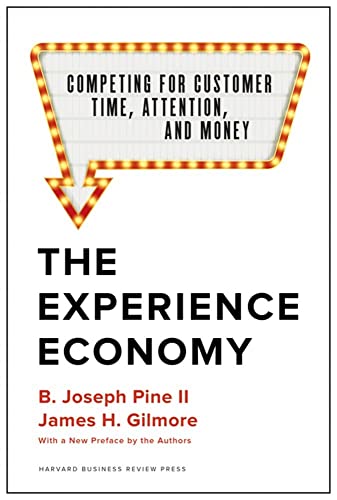
Book
The Experience Economy
Published in 1999 and more relevant today than when it was written. Pine and Gilmore argued that goods and services were no longer enough — that the next competitive frontier was the staging of memorable experiences. The framework of commodity → product → service → experience → transformation is one of the clearest mental models in business strategy.
Why it's on this list: If you work in financial product design and haven't read this, you're missing the theoretical foundation for almost everything the industry is trying to build. Banking is not a commodity — or it shouldn't be.
Buy on Amazon →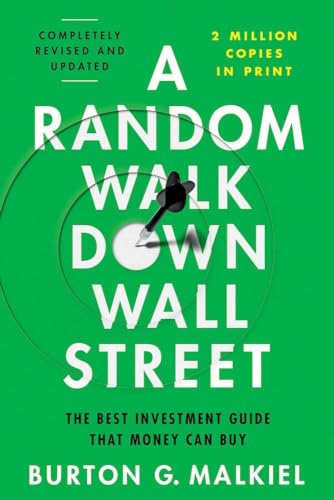
Book
A Random Walk Down Wall Street
First published in 1973, now in its 13th edition with over 1.5 million copies sold. Malkiel makes the empirical case that markets are efficient, active stock picking consistently underperforms index funds over time, and that the boring, disciplined approach to investing is almost always the right one.
Why it's on this list: Every person with a 401k should read this once. It will permanently change how you think about financial media, market predictions, and where your money should actually go.
Buy on Amazon →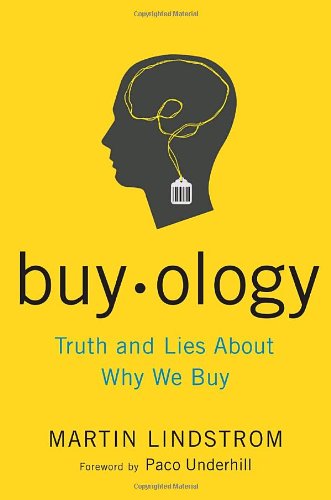
Book
Buyology
Lindstrom spent three years and $7 million running neuromarketing experiments — using brain scans to study what actually drives purchasing decisions. The results contradict most of what companies believe about advertising, branding, and consumer motivation. Warning labels on cigarettes increase desire. Religion and brand loyalty activate the same neural pathways.
Why it's on this list: This is the empirical companion to the behavioral thesis that runs through everything I write. People don't know why they do what they do — and that gap is where product strategy lives.
Buy on Amazon →Some links on this page are affiliate links. If you purchase through them, I may earn a small commission at no extra cost to you.